

Currently Empty: $0.00




Prerequisite: Principles of Mathematics, Grade 10, Academic
This course introduces the mathematical concept of the function by extending students’ experiences with linear and quadratic relations. Students will investigate properties of discrete and continuous functions, including trigonometric and exponential functions; represent functions numerically, algebraically, and graphically; solve problems involving applications of functions; investigate inverse functions; and develop facility in determining equivalent algebraic expressions. Students will reason mathematically and communicate their thinking as they solve multi-step problems.
MATHEMATICAL PROCESS EXPECTATIONS The mathematical processes are to be integrated into student learning in all areas of this course. Throughout this course, students will:
- Develop, select, apply, compare, and adapt a variety of problem-solving strategies as they pose and solve problems and conduct investigations, to help deepen their mathematical understanding.
- Develop and apply reasoning skills (e.g., use of inductive reasoning, deductive reasoning, and counterexamples; construction of proofs) to make mathematical conjectures, assess conjectures, and justify conclusions, and plan and construct organized mathematical arguments.
- Demonstrate that they are reflecting on and monitoring their thinking to help clarify their understanding as they complete an investigation or solve a problem (e.g., by assessing the effectiveness of strategies and processes used, by proposing alternative approaches, by judging the reasonableness of results, by verifying solutions).
- Select and use a variety of concrete, visual, and electronic learning tools and appropriate computational strategies to investigate mathematical ideas and to solve problems.
- Make connections among mathematical concepts and procedures and relate mathematical ideas to situations or phenomena drawn from other contexts (e.g., other curriculum areas, daily life, current events, art and culture, sports).
- Create a variety of representations of mathematical ideas (e.g., numeric, geometric, algebraic, graphical, pictorial representations; onscreen dynamic representations), connect and compare them, and select and apply the appropriate representations to solve problems.
- Communicate mathematical thinking orally, visually, and in writing, using precise mathematical vocabulary and a variety of appropriate representations, and observing mathematical conventions.
Please, login to leave a review
Course Includes:
- Price:$590$650
- Instructor:LMMHS Admin
- Duration:110 hrs
 Lessons:0
- Students:10
- Language:English
- Certifications:Yes
Courses You May Like

HSP3U – INTRODUCTION TO ANTHROPOLOGY, PSYCHOLOGY AND SOCIOLOGY – GRADE 11
$590$650
Prerequisite: The Grade 10 academic course in English, or the Grade 10...
Enroll Now
110 hrs
SPH3U – PHYSICS – GRADE 11
$590$650
SPH3U – PHYSICS – GRADE 11
$590$650
Prerequisite: Science, Grade 10, Academic This course develops students’ understanding of the...
Enroll Now
110 hrs
SCH3U – CHEMISTRY – GRADE 11
$590$650
SCH3U – CHEMISTRY – GRADE 11
$590$650
Prerequisite: Science, Grade 10, Academic This course enables students to deepen their...
Enroll Now
110 hrs
SBI3U – BIOLOGY – GRADE 11
$590$650
SBI3U – BIOLOGY – GRADE 11
$590$650
Prerequisite: Science, Grade 10, Academic This course furthers students’ understanding of the...
Enroll Now
NBE3U ENGLISH – UNDERSTANDING CONTEMPORARY FIRST NATIONS, METIS AND INUIT VOICES
$590$650
Course Type University Preparation Prerequisite English, Grade 10, Academic This course explores...
Enroll Now
110 hrs
HFC3M – FOOD AND CULTURE – GRADE 11
$590$650
Prerequisite: None This course focuses on the flavours, aromas, cooking techniques, foods,...
Enroll Now
110 hrs
GWL3O – DESIGNING YOUR FUTURE – GRADE 11
$590$650
Prerequisite: None This course prepares students to make successful transitions to postsecondary...
Enroll Now
110 hrs
ENG3U – ENGLISH FOR UNIVERSITY – GRADE 11
$590$650
Prerequisite: English, Grade 10, Applied This course emphasizes the development of literacy,...
Enroll Now110 hrs
ENG3C – ENGLISH FOR COLLEGE PREPARATION – GRADE 11
$590$650
Prerequisite: English, Grade 10, Applied This course emphasizes the development of literacy,...
Enroll Now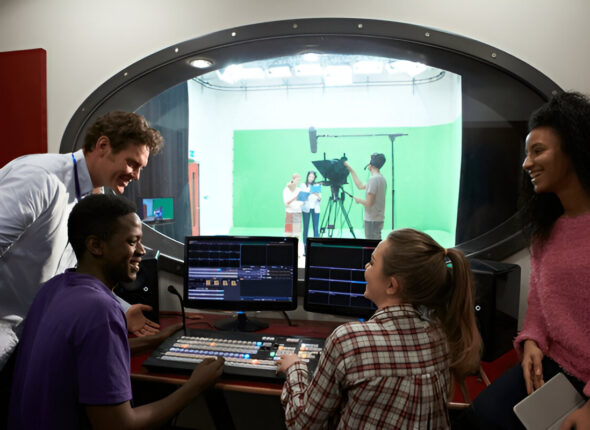
110 hrs
EMS3O – MEDIA STUDIES – GRADE 11
$590$650
EMS3O – MEDIA STUDIES – GRADE 11
$590$650
Prerequisite: English, Grade 10, Academic or Applied This course emphasizes knowledge and...
Enroll Now
110 hrs
CIE3M – THE INDIVIDUAL AND THE ECONOMY – GRADE 11
$590$650
Prerequisite: Canadian History since World War I, Grade 10, Academic or Applied...
Enroll Now
110 hrs
BAF3M – FINANCIAL ACCOUNTING FUNDAMENTALS – GRADE 11
$590$650
Prerequisite: None This course introduces students to the fundamental principles and procedures...
Enroll Now
110 hrs
AVI3M – VISUAL ARTS – GRADE 11
$590$650
AVI3M – VISUAL ARTS – GRADE 11
$590$650
This course enables students to further develop their knowledge and skills in...
Enroll Now